Sabtu, 19 Februari 2011

[B258.Ebook] Free Ebook Why Time Flies: A Mostly Scientific Investigation, by Alan Burdick

Free Ebook Why Time Flies: A Mostly Scientific Investigation, by Alan Burdick

Why Time Flies: A Mostly Scientific Investigation, By Alan Burdick. Eventually, you will certainly discover a brand-new experience as well as understanding by spending more money. But when? Do you believe that you require to obtain those all requirements when having much money? Why do not you attempt to obtain something easy in the beginning? That's something that will lead you to recognize even more concerning the globe, adventure, some areas, history, amusement, and more? It is your own time to proceed reading behavior. One of the books you can take pleasure in now is Why Time Flies: A Mostly Scientific Investigation, By Alan Burdick right here.

Why Time Flies: A Mostly Scientific Investigation, by Alan Burdick

Why Time Flies: A Mostly Scientific Investigation, by Alan Burdick


Why Time Flies: A Mostly Scientific Investigation, by Alan Burdick

Free Ebook Why Time Flies: A Mostly Scientific Investigation, by Alan Burdick

How if your day is begun by reviewing a book Why Time Flies: A Mostly Scientific Investigation, By Alan Burdick Yet, it remains in your device? Everyone will consistently touch and us their gizmo when waking up and in early morning activities. This is why, we mean you to additionally review a book Why Time Flies: A Mostly Scientific Investigation, By Alan Burdick If you still confused ways to get the book for your gizmo, you can comply with the means below. As below, we offer Why Time Flies: A Mostly Scientific Investigation, By Alan Burdick in this web site.

Here, we have numerous book Why Time Flies: A Mostly Scientific Investigation, By Alan Burdick as well as collections to read. We additionally serve variant types and also type of guides to browse. The fun publication, fiction, past history, unique, scientific research, as well as other kinds of publications are offered below. As this Why Time Flies: A Mostly Scientific Investigation, By Alan Burdick, it becomes one of the recommended book Why Time Flies: A Mostly Scientific Investigation, By Alan Burdick collections that we have. This is why you remain in the best site to view the impressive e-books to possess.

It won't take even more time to download this Why Time Flies: A Mostly Scientific Investigation, By Alan Burdick It will not take more cash to publish this publication Why Time Flies: A Mostly Scientific Investigation, By Alan Burdick Nowadays, people have actually been so wise to utilize the technology. Why do not you use your device or other gadget to conserve this downloaded and install soft documents e-book Why Time Flies: A Mostly Scientific Investigation, By Alan Burdick In this manner will let you to always be come with by this e-book Why Time Flies: A Mostly Scientific Investigation, By Alan Burdick Of training course, it will certainly be the most effective friend if you read this publication Why Time Flies: A Mostly Scientific Investigation, By Alan Burdick until completed.

Be the very first to obtain this e-book now as well as obtain all reasons you have to review this Why Time Flies: A Mostly Scientific Investigation, By Alan Burdick Guide Why Time Flies: A Mostly Scientific Investigation, By Alan Burdick is not simply for your obligations or need in your life. Publications will certainly always be an excellent friend in whenever you check out. Now, let the others know about this web page. You could take the advantages and also discuss it additionally for your good friends and individuals around you. By this method, you can actually obtain the significance of this e-book Why Time Flies: A Mostly Scientific Investigation, By Alan Burdick beneficially. Just what do you think of our suggestion below?

Why Time Flies: A Mostly Scientific Investigation, by Alan Burdick

“[Why Time Flies] captures us. Because it opens up a well of fascinating queries and gives us a glimpse of what has become an ever more deepening mystery for humans: the nature of time.” —The New York Times Book Review

“Erudite and informative, a joy with many small treasures.” —Science

“Time” is the most commonly used noun in the English language; it’s always on our minds and it advances through every living moment. But what is time, exactly? Do children experience it the same way adults do? Why does it seem to slow down when we’re bored and speed by as we get older? How and why does time fly?

In this witty and meditative exploration, award-winning author and New Yorker staff writer Alan Burdick takes readers on a personal quest to understand how time gets in us and why we perceive it the way we do. In the company of scientists, he visits the most accurate clock in the world (which exists only on paper); discovers that “now” actually happened a split-second ago; finds a twenty-fifth hour in the day; lives in the Arctic to lose all sense of time; and, for one fleeting moment in a neuroscientist’s lab, even makes time go backward. Why Time Flies is an instant classic, a vivid and intimate examination of the clocks that tick inside us all.

  • Sales Rank: #1877 in Books
  • Published on: 2017-01-24
  • Released on: 2017-01-24
  • Original language: English
  • Dimensions: 9.00" h x 1.00" w x 6.00" l, .0 pounds
  • Binding: Hardcover
  • 320 pages

Review
“Alan Burdick offers a fascinating and searching account of how we perceive time’s passage. It will change the way you think about the past, and also the present.” (Elizabeth Kolbert, author of The Sixth Extinction)

“Alan Burdick turns an obsession with the nature of time into a thrilling quest—one that brilliantly illuminates a subject that haunts us all. Time may fly by�but at least while�reading these pages it is never wasted.” (David Grann, author of The Lost City of Z)

“In his lucid, thoughtful, and beautifully written inquiry about time—what is it, really? Did we invent it, or does it invent us?—Burdick offers nothing less than a new way of reconsidering what it means to be human.” (Hanya Yanagihara, author of A Little Life and The People in the Trees)

“Burdick tours�that unsettling passage of existence we call “time”—how our brains process it, how infants first grasp it, how our conversations encode it—and returns with a spellbinding, provocative book that will fill you with wonder.” (Robert Sapolsky, author of Why Zebras Don’t Get Ulcers)

“A marvelous meditation on the subtle mysteries of time.” (Olivia Judson, author of Dr. Tatiana’s Sex Advice to All Creation)

“This book blew my mind.” (Charles Duhigg, author of The Power of Habit)

“Burdick is like a charming and witty river guide, exploring the tributaries and side-streams along the river of consciousness—the science, the history, the literature, the deep and beautiful paradoxes that make us what we are.�Why Time Flies�will enhance your experience of what may be, in the end, the most intimate relationship of your li�—your connection with the passage of time.” (Jonathan Weiner, author of Long for this World)

“An insightful meditation on the curious nature of time . . . �A highly illuminating intellectual investigation.”� (Kirkus Reviews)

"[Burdick] is one of the finest science writers at work today, with an uncanny ability explain knotty topics, with humanity, and humor." (Publishers Weekly staff picks, best books of 2016)

"Burdick places his readers in the centers of their temporal universes." (Publishers Weekly)

“In his search for temporal meaning, Burdick takes us on a journey around the world. . . . erudite and informative, a joy with many small treasures.” (Science)

"Mr. Burdick sets out on (per the subtitle) a “mostly scientific investigation” into how time works . . . There isn’t a single time but many different times that must be imperfectly reconciled, and the ambiguity gives a playful, reflective writer like Mr. Burdick time to shine." (The Wall Street Journal)

“[Why Time Flies] captures us . . . it opens up a well of fascinating queries and gives us a glimpse of what has become an ever more deepening mystery for humans: the nature of time. . . . Burdick is one of those praiseworthy journalists who have an acute sense of what is scientifically relevant, as well as an ability to translate the dry language of laboratory science into something that connects directly to our experience, emotions and daily questions. He presents scientific inquiry for what it really is . . . a vibrant lively adventure of discovery, where what we do not yet know is more interesting than what we know. And few topics touch us as directly as time. . . . The book is a wealth of stories and surprising facts, each page raising our curiosity and unveiling a novel aspect of our relation with temporality.” (The New York Times Book Review)

“An intellectual adventure that renders a hefty topic accessible to the general public. And what topic is more hefty than time itself — how we perceive it, how we study it, and how we live with it? . . . Burdick draws on bright minds from philosophy, religion, neurobiology, psychology and other fields both ancient and cutting-edge. . . . we are thankful to have Burdick’s life and insights as a guide.”� (Richmond Times-Dispatch)

"Burdick tackles [time] with wit and wonder, mapping a nuanced exploration through mathematics, sciences, philosophy and observations of his own young sons. . . . The book teems with entertaining trivia and stories. . . . Burdick's compelling research consistently conveys curiosity and awe for the notion of time and its passage. Why Time Flies is not a quick read; it demands contemplation. But, naturally, it's time well spent." (Shelf Awareness)

About the Author
Alan Burdick is a staff writer and former senior editor at The New Yorker and a frequent contributor to Elements, the magazine’s science-and-tech blog. His writing has also appeared in The New York Times Magazine, Harper’s, GQ, Discover, Best American Science and Nature Writing, and elsewhere. His first book, Out of Eden: An Odyssey of Ecological Invasion, was a National Book Award finalist and won the Overseas Press Club Award for environmental reporting.�

Excerpt. � Reprinted by permission. All rights reserved.
Why Time Flies
I settle into a seat on the Paris M�tro and rub the sleep from my eyes. I feel unmoored. The calendar says late winter but outside my window the day is warm and fair, the leaf buds gleam, the city is resplendent. I arrived from New York yesterday and stayed out past midnight with friends; today my head is still in the dark, glued in a season and a time zone several hours behind me. I glance at my watch: 9:44 a.m. As usual, I am late.

The watch is a recent gift from my father-in-law, Jerry, who wore it himself for many years. When Susan and I became engaged, her parents offered to buy me a new watch. I declined, but for a long time afterward I couldn’t shake the worry that I’d made a poor impression. What sort of son-in-law ignores the time? So when Jerry subsequently offered me his old wristwatch I said yes right away. It has a golden dial set on a wide silver wristband; a black face bearing the brand name (Concord) and the word quartz in bold letters; and the hours denoted by unnumbered lines. I liked the new weight on my wrist, which made me feel important. I thanked him and remarked, more accurately than I could understand at that moment, that it would be a helpful addition to my research on time.

On the evidence of my senses, I had come to believe that the time “out there” in clocks, watches, and train schedules is quantifiably distinct from the time coursing through my cells, body, and mind. But the fact was that I knew as little about the former as I did about the latter. I could not say how a particular clock or watch worked nor how it managed to agree so closely with the other watches and clocks that I occasionally noticed. If there was a real difference between external and internal time—as real as the difference between physics and biology—I had no idea what it was.

So my new, used watch would be a kind of experiment. What better way to plumb my relationship to time than to physically attach it to me for a while? Almost immediately I saw results. For the first few hours of wearing the watch I could think about nothing else. It made my wrist sweat and tugged at my whole arm. Time dragged literally and, because my mind dwelt on the dragging, figuratively. Soon enough I forgot about the watch. But on the evening of the second day I suddenly remembered it again when, while bathing one of our infant sons in the tub, I noticed it on my wrist, underwater.

Secretly I hoped that the watch might confer some degree of punctuality. For instance, it seemed to me that if I looked at the watch often enough I might yet arrive on time for my ten o’clock appointment in S�vres, just outside Paris, at the Bureau International des Poids et Mesures—the International Bureau of Weights and Measures. The Bureau is an organization of scientists devoted to perfecting, calibrating, and standardizing the basic units of measurement used around the world. As our economies globalize, it becomes ever more imperative that we all be on precisely the same metrological page: that one kilogram in Stockholm equals exactly one kilogram in Jakarta, that one meter in Bamako equals exactly one meter in Shanghai, that one second in New York equals exactly one second in Paris. The Bureau is the United Nations of units, the world standardizer of standards.

The organization was formed in 1875 through the Convention of the Metre, a treaty meant to ensure that the basic units of measurement are uniform and equivalent across national borders. (The first act of the Convention was for the Bureau to hand out rulers: thirty precisely measured bars made of platinum and iridium, which would settle international disagreements over the correct length of a meter.) Seventeen nation members joined the original Bureau; fifty-eight now belong, including all the major industrialized nations. The suite of standard units it oversees has grown to seven: the meter (length), the kilogram (mass), the ampere (electrical current), the kelvin (temperature), the mole (volume), the candela (luminosity), and the second.

Among its many duties, the Bureau maintains a single, official worldwide time for all of Earth, called Coordinated Universal Time, or U.T.C. (When U.T.C. was first devised, in 1970, the organizing parties could not agree on whether to use the English acronym, C.U.T., or the French acronym, T.U.C., so they compromised on U.T.C.) Every timepiece in the world, from the hyperaccurate clocks in orbiting global-positioning satellites to the cog-bound wristwatch, is synchronized directly or eventually to U.T.C. Wherever you live or go, whenever you ask what time it is, the answer ultimately is mediated by the timekeepers at the Bureau.

“Time is what everybody agrees the time is,” a time researcher explained to me at one point. To be late, then, is to be late according to the agreed-on time. By definition, the Bureau’s time is not merely the most correct time in the world, it is precisely the correct time. This meant, as I glanced at my watch yet again, that I was not merely late: I was as late as I have ever been and as late as it is possible to be. Soon enough I would learn just how far behind the time I truly was.

•��•��•

A clock does two things: it ticks and it counts the ticks. The clepsydra, or water clock, ticks to the steady drip of water, which, in more advanced devices, drives a set of gears that nudges a pointer along a series of numbers or hash marks, thereby indicating time’s passage. The clepsydra was in use at least three thousand years ago, and Roman senators used them to keep their colleagues from talking for too long. (According to Cicero, to “seek the clock” was to request the floor and to “give the clock” was to yield it.) Water ticked and added up to time.

For most of history, though, in most clocks, what ticked was Earth. As the planet rotates on its axis, the sun crosses the sky and casts a moving shadow; cast on a sundial, the shadow indicates where you are in the day. The pendulum clock, invented in 1656 by Christiaan Huygens, relies on gravity (affected by Earth’s rotation) to swing a weight back and forth, which drives a pair of hands around the face of the clock. A tick is simply an oscillation, a steady beat; Earth’s turning provided the rhythm.

In practice, what ticked was the day, the rotational interval from one sunrise to the next. Everything in between—the hours and minutes—was contrived, a man-made way to break up the day into manageable units for us to enjoy, employ, and trade. Increasingly our days are governed by seconds. They are the currency of modern life, the pennies of our time: ubiquitous and critical in a pinch (for instance, when you just manage to make a train connection) yet sufficiently marginal to be frittered away or dropped by the handful without thought. For centuries, the second existed only in the abstract. It was a mathematical subdivision, defined by relation: one-sixtieth of a minute, one thirty-six-hundredth of an hour, one eighty-six-thousand-four-hundredth of a day. Seconds pendulums appeared on some German clocks in the fifteenth century. But it wasn’t until 1670, when the British clockmaker William Clement added a seconds pendulum, with its familiar tick-tock, to Huygens’s pendulum clock, that the second acquired a reliably physical, or at least audible, form.

The second fully arrived in the twentieth century, with the rise of the quartz clock. Scientists had found that a crystal of quartz resonates like a tuning fork, vibrating at tens of thousands of times per second when placed in an oscillating electrical field; the exact frequency depends on the size and shape of the crystal. A 1930 paper titled “The Crystal Clock” noted that this property could drive a clock; its time, derived from an electrical field instead of gravity, would prove reliable in earthquake zones and on moving trains and submarines. Modern quartz clocks and wristwatches typically use a crystal that has been laser-engineered to vibrate at exactly 32,768 (or 215) times per second, or 32,768 Hz. This provided a handy definition of the second: 32,768 vibrations of a quartz crystal.

By the nineteen-sixties, when scientists managed to measure an atom of cesium naturally undergoing 9,192,631,770 quantum vibrations per second, the second had been officially redefined to several more decimal places of accuracy. The atomic second was born, and time was upended. The old temporal scheme, known as Universal Time, was top-down: the second was counted as a fraction of the day, which took its shape from Earth’s motion in the heavens. Now, instead, the day would be measured from the ground up, as an accumulation of seconds. Philosophers debated whether this new atomic time was as “natural” as the old time. But there was a bigger problem: the two times don’t quite agree. The increasing accuracy of atomic clocks revealed that Earth’s rotation is gradually slowing, adding very slightly to the length of each day. Every couple of years this slight difference adds up to a second; since 1972, nearly half a minute’s worth of “leap seconds” have been added to International Atomic Time to bring it into sync with the planet.

In the old days, anyone could make his or her own seconds through simple division. Now the seconds are delivered to us by professionals; the official term is “dissemination,” suggesting an activity akin to gardening or the distribution of propaganda. Around the world, mainly in national timekeeping laboratories, some three hundred and twenty cesium clocks, each the size of a small suitcase, and more than a hundred large, maser-driven devices generate, or “realize,” highly accurate seconds on a near-continuous basis. (The cesium clocks, in turn, are checked against a frequency standard generated by a device called a cesium fountain—a dozen or so exist—which uses a laser to toss cesium atoms around in a vacuum.) These realizations are then added up to reveal the time of day. As Tom Parker, a former group leader at the National Institute of Standards and Technology, told me, “The second is the thing that ticks; time is the thing that counts the ticks.”

N.I.S.T. is a federal agency that helps produce the official, civil time for the United States. Experts at its two laboratories, in Gaithersburg, Maryland, and Boulder, Colorado, keep a dozen or more cesium clocks running at any given time. As precise as these clocks are, they disagree with one another on a scale of nanoseconds, so every twelve minutes they are compared to one another tick by tick to see which are running fast and which are running slow and by exactly how much. The data from the clock ensemble is then numerically mashed into what Parker calls “a fancy average,” and this becomes the basis for the official time.

How this time reaches you depends on your timekeeping device and where you happen to be at the moment. The clock in your laptop or computer regularly checks in with other clocks across the Internet and calibrates itself to them; some or all of these clocks eventually pass through a server run by N.I.S.T. or another official clock and are thereby set even more accurately. Every day, N.I.S.T.’s many servers register 13 billion pings from computers around the world inquiring about the correct time. If you are in Tokyo, you might be linked to a time server in Tsukuba that is run by the National Metrology Institute of Japan; in Germany, the source is the Physikalisch-Technische Bundensanstalt.

Wherever you are, if you’re checking the clock on your cell phone, it’s probably receiving its time from the Global Positioning System, an array of navigation satellites synchronized to the U.S. Naval Observatory, near Washington, D.C., which realizes its seconds with an ensemble of seventy-odd cesium clocks. Many other clocks—wall clocks, desk clocks, wristwatches, travel alarms, car-dashboard clocks—contain a tiny radio receiver that, in the United States, is permanently tuned to pick up a signal from N.I.S.T. Radio Station WWVB, in Fort Collins, Colorado, which broadcasts the correct time as a code. (The signal is very low frequency—60 Hz—and the bandwidth so narrow that a good minute is needed for the complete time code to come through.) These clocks can generate the time on their own, but for the most part they act as middlemen, serving you the time that is disseminated by more refined clocks somewhere higher up in the temporal chain of command.

My wristwatch, in contrast, has no radio receiver or any way of talking to satellites; it’s all but off the grid. To synchronize with the wider world I need to look at an accurate clock and then turn the stem of my watch and set the time accordingly. To achieve even greater accuracy I could regularly take my watch to a shop and have its mechanism calibrated to a device called a quartz oscillator, which gains its precision from a frequency standard monitored by N.I.S.T. Otherwise, my watch will keep its realizations to itself and will soon fall out of step with everyone else’s. I had assumed that putting on a watch meant strapping established time to my wrist. But, in fact, unless I take the measure of the clocks around me, I am still a rogue. “You’re free-running,” Parker said.

•��•��•

From the late seventeenth century to the early twentieth century, the most accurate clock in the world resided at the Royal Observatory in Greenwich, England; it was regularly reset by the Astronomer Royal according to the movement of the heavens. This situation was good for the world but quickly became a problem for the Astronomer Royal. Beginning around 1830, he increasingly found himself interrupted from his work by a knock on the door from a townsperson. Pardon me, he was asked. Would you tell me the time?

So many people came knocking that eventually the town petitioned the astronomer for a proper time service; in 1836 he assigned his assistant, John Henry Belville, to the task. Every Monday morning, Belville calibrated his timepiece, a pocket chronometer originally made for the duke of Sussex by the esteemed clockmaker John Arnold & Son, to the observatory time. Then he set off for London to visit his clients—clockmakers, watch repairers, banks, and private citizens who paid a fee to synchronize their time to his and, by extension, the observatory’s. (Belville eventually replaced the chronometer’s gold case with a silver one in order to draw less attention in “the less desirable quarters of the town.”) When Belville died, in 1856, his widow took over; when she retired, in 1892, the service passed to their daughter Ruth, who became known as “the Greenwich time lady.” Using the same chronometer, which she called “Arnold 345,” Miss Belville made the same tour, disseminating what by then was known as Greenwich Mean Time, the official time of Britain. The invention of the telegraph, which enabled remote clocks to synchronize with Greenwich time almost immediately and at lower cost, eventually rendered Miss Belville almost but not quite obsolete. When she retired around 1940, in her mideighties, she still served some fifty clients.

I had come to Paris to meet with the Greenwich time lady of the modern era, the Miss Belville for all of Earth: Dr. Elisa Felicitas Arias, the director of the B.I.P.M.’s Time Department. Arias is slender, with long brown hair and the air of a kindly aristocrat. An astronomer by training, Arias worked for twenty-five years at observatories in Argentina, her native country, the last ten of them with the Naval Observatory; her specialty is astrometry, the correct measuring of distances in outer space. Most recently she worked with the International Earth Rotation and Reference Systems Service, which monitors the ever-so-slight variations in our planet’s motions and consequently determines when the next leap second should be added to the temporal mix. I met her in her office, and she offered me a cup of coffee. “We have one common objective,” she said of her department. “To provide a timescale suitable to be an international reference.” The aim, she added, is “ultimate traceability.”

Of the hundreds of clocks and clock ensembles run by the Bureau’s fifty-eight member-nations, only about fifty—the “master clocks,” one per country—are up and running and providing official time; everywhere, at all hours, they realize seconds. But their realizations don’t agree with one another. It’s a matter of nanoseconds, or billionths of a second. That’s not enough to trouble electrical-power companies (which need accuracies only in the milliseconds) or disrupt telecommunications (which traffic in microseconds). But the clocks on different navigation systems—such as G.P.S., which is run by the U.S. Department of Defense, and the European Union’s new Galileo network—need to agree within a few nanoseconds in order to provide consistent service. The world’s clocks should agree, or should at least be well aimed toward the same point of synchrony, and Universal Coordinated Time is the designated goal.

Universal Coordinated Time is derived by comparing all the member clocks as they tick their seconds simultaneously, and noting the discrepancies. It is a tremendous technical challenge. For one thing, the clocks are hundreds or thousands of miles apart. Given the time it takes for an electronic signal to traverse such distances—a signal that says, in effect, “Start ticking now”—it is difficult to know precisely what “at the same time” means. To get around this problem, Arias’s section uses G.P.S. satellites to transfer data. The satellites all have known positions and carry clocks synchronized to the U.S. Naval Observatory; with this information, the B.I.P.M. can calculate the precise moments when time signals are being sent to them from clocks around the world.

Even then, uncertainties loom. The position of a satellite can’t be known exactly; bad weather and Earth’s atmosphere can slow or alter a signal’s path and obscure its true travel time. And the equipment harbors electronic noise that can obscure precise measurement. Offering an analogy, Arias motioned to the door of her office. “If I ask you what time it is, you’ll tell me the time and I’ll compare it to mine,” she said. “We are face-to-face. If I say, ‘Go out, close the door, and tell me what time it is,’ I will ask you and say, ‘No no no, say it again, there is some noise’ ”—she made a funny buzzing sound with her lips, Brrrrrrrrip!—“ ‘between us.’ ” A great deal of care and effort goes into correcting for this noise, to ensure that the message heard by the B.I.P.M. accurately reflects the relative behavior of the world’s clocks.

“We have eighty laboratories around the world,” Arias said; some nations have more than one. “We need to organize all those times.” She sounded gentle and encouraging, like Julia Child describing the essence of a good vichyssoise. First, Arias’s team in Paris gathers all the necessary ingredients: the nanosecond-scale differences between each member clock and every other one, plus a strong dash of local data about the historical behavior of each clock. The information is then run through what Arias called “the algorithm,” which takes into account the number of clocks in service (on any given day some clocks may be down for repair or recalibration), gives slight statistical favor to the more accurate of these clocks, and whisks the whole to a uniform texture.

The process is not purely computational. A human is needed to consider small yet critical factors: that not all labs calculate their clock data exactly the same way; that a particular clock has been behaving oddly of late and its contribution needs to be reweighted; that, owing to software errors, some of the minus signs in the spreadsheet were accidentally changed to plus signs and need to be changed back. Wielding the algorithm also involves a certain amount of individual, mathematical artistry. “There is some personal flair involved,” Arias said.

The final result is what Arias calls “an average clock,” in the best sense: its time is more robust than any single clock or national ensemble could hope to provide. By definition and by universal agreement, or at least by agreement of the fifty-eight signatory countries, its time is perfect.

•��•��•

It takes time to make Coordinated Universal Time. Simply ironing out the uncertainty and noise from all the G.P.S. receivers takes two or three days. The task of calculating U.T.C. would be logistically overwhelming if it were done continuously, so each member clock takes a reading of local time every five days at exactly zero hour U.T.C. On the fourth or fifth day of the following month, each lab sends its accumulated data to the B.I.P.M. for Arias and her team to analyze, average, check, and publish.

“We try to do it as soon as possible, without neglecting any checking,” she said. “That process takes more or less five days. We receive on the fourth or fifth of the month, start calculating on the seventh, publish on the eighth or ninth or tenth.” Technically, what is being assembled is International Atomic Time; creating U.T.C. is a simple matter of adding on the correct number of leap seconds. “Of course there is no clock providing U.T.C. exactly,” Arias said. “You only have local realizations of U.T.C.”

I suddenly understood: the world clock exists only on paper and only in retrospect. Arias smiled. “When people say, ‘Can I see the best clock in the world?’ I say, ‘Okay, here you are, this is the best clock in the world.’ ” She handed me a sheaf of papers stapled in one corner. It was a monthly report, or circular, that is distributed to all the member time laboratories. The report, called Circular T, is the main purpose and product of the B.I.P.M. Time Department. “It is published once every month, and it is giving information on time in the past, which is the month before.”

The world’s best clock is a newsletter. I flipped through its pages and saw column after column of numbers. Listed down the left were the names of the member clocks: IGMA (Buenos Aires), INPL (Jerusalem), IT (Torino), and the rest. The columns across the top were dated every five days through the previous month—Nov. 30, Dec. 5, Dec. 10, and so on. The number in each cell represented the difference between Coordinated Universal Time and the local realization of U.T.C. as measured by a particular laboratory on a particular day. On December 20th, for instance, the figure for the national clock of Hong Kong was 98.4, indicating that, as of that moment of measurement, the national clock of Hong Kong was 98.4 nanoseconds behind Coordinated Universal Time. In contrast, the figure for Bucharest’s clock that day was minus 1118.5, indicating that it was 1118.5 nanoseconds—a sizable step—ahead of the universal average.

The purpose of Circular T, Arias said, is to help member laboratories monitor and refine their accuracy relative to U.T.C., a procedure known as “steering.” By learning how far their clocks deviated from the U.T.C. average during the previous month, member labs can tweak and correct their equipment to perhaps aim a little closer next month. No clock ever achieves perfect accuracy; consistency is sufficient. “It is useful because laboratories pilot their U.T.C.s,” Arias said; she made time sound like a ship in a channel. “They need to know how the U.T.C. locally behaves. So they check if they have correctly steered to Circular T. That’s why they’re all checking their email and the Internet, to know where they were last month with respect to U.T.C.”

For the most accurate clocks, steering is essential. “Sometimes you have a very good clock, and then it takes a time step—a jump in time,” Arias said. On her copy of the latest Circular T, she pointed to the row of numbers representing the U.S. Naval Observatory. Its figures were all admirably small, in the range of double-digit nanoseconds. “This is an excellent realization of U.T.C.,” Arias said. That’s no surprise, she added, since the U.S. Naval Observatory, which has the largest number of clocks in the international pool, represents roughly twenty-five percent of the total weight of U.T.C. The U.S. Naval Observatory is responsible for steering the time utilized by the G.P.S. satellite system, so it has a global responsibility to follow U.T.C. very strictly.

But steering isn’t for everyone. Piloting one’s clock requires expensive equipment, and not all laboratories can afford to bother. “They let their clocks live their life,” Arias said. She noted a row of numbers from a laboratory in Belarus, which seemed to be living a life of leisure, well off the standard. I asked whether the B.I.P.M. ever rejects a laboratory’s contribution as too inaccurate. “Never,” Arias replied. “We always want their time.” As long as a national time lab is equipped with a decent clock and receiver, its contributions are averaged in to U.T.C. “When you build time,” she said, one of the goals is “the broad dissemination of time”—U.T.C. can’t be considered universal unless it includes everyone, no matter how out of step they might be.

I was still wrapping my head around what, and when, Coordinated Universal Time is. (“It took me a couple of years,” Tom Parker later told me.) To the extent that a paper clock can be said to exist, it does so only in the past tense, derived as it is from data gathered the previous month; Arias calls U.T.C. “a post-real time process,” a dynamic preterit. Then again, the numbers in the columns of her paper clock serve much like course corrections or channel markers for the real clocks out there, to help them steer in the right direction—as if U.T.C. were a future noun, like a harbor just over the horizon. When you look to your watch, clock, or cell phone for a reading of the official time, as derived from Boulder or Tokyo or Berlin, what you receive is only a very near estimate of the correct time, which won’t be known for another month or so. Perfectly synchronized time evidently does exist—just not anymore and not quite yet; it is in a perpetual state of becoming.

•��•��•

I had come to Paris under the assumption that the world’s most exact time emanates from some tangible, ultrasophisticated device: a fancy clock with a face and hands, a bank of computers, a tiny, shimmering rubidium fountain. The reality was far more human: the world’s best time—Coordinated Universal Time—is produced by a committee. The committee relies on advanced computers and algorithms and the input of atomic clocks, but the metacalculations, the slight favoring of one clock’s input over another’s, is ultimately filtered through the conversation of thoughtful scientists. Time is a group of people talking.

Arias noted that her Time Department operates within a still-larger ensemble of consultative committees, advisory teams, ad hoc study groups, and monitoring panels. It hosts regular visits from international experts, holds occasional meetings, issues reports, and analyzes the feedback. It is checked, supervised, calibrated. Occasionally the overarching Consultative Committee for Time and Frequency, or C.C.T.F., weighs in. “We don’t operate alone in the world,” she said. “For minor things we can make decisions ourselves. For major things we have to submit proposals to the C.C.T.F., and the experts from the best laboratories will say, ‘We agree’ or ‘We don’t agree.’ ”

All this redundancy is designed to counterbalance one ineluctable fact: no single clock, no single committee, no individual alone keeps perfect time. That’s the nature of time everywhere, it turns out. As I began talking with scientists who study how time works in the body and mind, they all described its operation as some version of a congress. Clocks are distributed throughout our organs and cells, working to communicate and keep in step with one another. Our sense of time’s passage is rooted not in one region of the brain but results from the combined working of memory, attention, emotion, and other cerebral activities that can’t be singularly localized. Time in the brain, like time outside it, is a collective activity. Still, we’re accustomed to imagining an ultimate collective somewhere in there—a core group of sifters and sorters, like an internal Bureau International des Poids et Mesures, perhaps run by a brown-haired Argentine astronomer. Where is the Dr. Arias in us?

At one point I asked Arias to describe her personal relationship to time.

“Very bad,” she replied. There was a small digital clock on her desk; she picked it up and aimed its readout at me. “What time is it?”

I read the numbers. “One-fifteen,” I said.

She motioned for me to look at my wristwatch: “What time is it?”

The hands read 12:55 p.m. Arias’s clock was twenty minutes fast.

“At home, I don’t have two clocks giving the same time,” she said. “I am very often late for appointments. My alarm clock is fifteen minutes in advance.”

I was relieved to hear this but I was troubled on behalf of the world. “Maybe that’s what happens when you think about time all the time,” I offered. If it’s your job to coordinate the world’s clocks, to create from Earth’s gradients of light and dark a uniform and unified time, maybe you look to home as your refuge, the one place where you can ignore your watch, kick off your shoes, and enjoy some truly private time.

“I don’t know,” Arias said, with a Parisian shrug. “I have never missed a flight or missed a train. But when I know I can take this little degree of freedom, I do.”

We commonly talk about time as an opponent: thief, oppressor, master. In a 1987 book called Time Wars, written at the start of the digital age, the social activist Jeremy Rifkin lamented that humanity had embraced “an artificial time environment” ruled by “mechanical contrivances and electronic impulses: a time plane that is quantitative, fast-paced, efficient, and predictable.” Rifkin was particularly troubled by computers because they traffic in nanoseconds, “a speed beyond the realm of consciousness.” This new “computime,” as he called it, “represents the final abstraction of time and its complete separation from human experience and the rhythms of nature.” In contrast he praised the efforts of “time rebels”—a broad category that included advocates of alternative education, sustainable agriculture, animal rights, women’s rights, and disarmament—who “argue that the artificial time worlds we have created only increase our separation from the rhythms of nature.” Time, in this telling, is a tool of the establishment and an enemy of both nature and self.

The rhetoric is excessive but thirty years later Rifkin’s complaint does strike a common chord. Why else are we obsessed with productivity and time management if not to discover some saner way of navigating our lives? It’s not “computime” that haunts us as much as our slavish attachment to handheld computers and corporate-branded smartphones, which allow the workday and workweek to never end. Not wearing a watch was my way of shrugging off The Man, even if I’d never laid eyes on him.

Still, to cast blame on “artificial” time is to give nature too much credit. Maybe there was a time when time was a strictly personal affair, but it’s hard to imagine how long ago that would have been. Medieval serfs toiled to the distant sound of village bells; centuries earlier, monks rose, chanted, and prostrated themselves to the rhythm of chimes. In the second century B.C.E., the Roman playwright Plautus rued the popularity of sundials, which “cut and hack my days so wretchedly into small pieces.” The ancient Incas used a complex calendar to calculate when to sow and harvest and to identify the most auspicious times for a human sacrifice. (The calendar included a recurring “Vague Year” with eighteen months of twenty days each plus, at the end, five “nameless days” of ill omen.) Even early humans must have taken note of the daylight on the cave wall, in order to hunt effectively and return safely before dark. Even if any one of these customs were closer than today’s to “the rhythms of nature,” it would be hard to embrace as a model that Earth’s several billion residents should follow.

I looked again at the sheaf of papers Arias had handed me, then at her clock, then at my watch: it was time to go. For months I’d been reading the works of sociologists and anthropologists arguing that time is a “social construct.” I’d interpreted the phrase to mean something like “artificially flavored,” but now I understood: time is a social phenomenon. This property is not incidental to time; it is its essence. Time, equally in single cells as in their human conglomerates, is the engine of interaction. A single clock works only as long as it refers, sooner or later, obviously or not, to the other clocks around it. One can rage about it, and we do. But without a clock and the dais of time, we each rage in silence, alone.

Most helpful customer reviews

17 of 17 people found the following review helpful.
Stop time (for a while) by reading this book
By P. Freed
Time seems to stand still --- we are "locked" in a perpetual now, and (sadly) can't go back or forward in time the way we do in space. I wish we could; we could skip the bad parts of life and relive the good ones ad nauseum; certain places in time could be home to us. On the other hand, it seems to fly, at least in the sense that it is unstoppable. Burdick does an amazing job grappling with these fundamental experiences, and trying to understand how --- if at all --- the brain makes it possible. I loved his New Yorker piece on this topic, and the book --- beautifully written --- has led to several fascinating conversations and beautiful memories and (I take it) impossible fantasies. A lovely, warm, almost poetic read.

PS bought it on Amazon, delivered next day, very well made book, a pleasure to hold and read.

4 of 4 people found the following review helpful.
Neurons, neurons, and more neurons firing in nanosecond intervals
By Ana Marshall
I was expecting a little more philosophical discussion (my bad). The book has many (and I mean "many") experiments with neurons firing at nanoseconds intervals from each other. If you like science and like this minutia, you'll love this book. Me? Not so much. Still, I did find it very interesting because it allowed me to see how science really can truly be. At times it felt to me that the research was asking how many angels can dance on the tip of a pin. The book, nevertheless, managed to hold my attention, mostly because I was more interested in an answer to the question posed by the title, which only came at the very end, and I did not find very satisfying. It involved, again, research delving into the subjective perception of people of various ages. I would have liked to see some research on how the sensations of the body itself, and not just the nanosecond intervals in the firing of neurons in the brain, affect how we perceive time as we age. I come from a world where truth is seen as emanating from the body, (what here is called "the gut"), not only from the brain. In my experience, now that my "eyes look upon the grave," I find that time seems to fly because my body has slowed down. Experience seems now like a movie stuck in a rapid fast forward motion. This is not a bad thing because when we look at a movie in fast forward motion, we see the follies and the comical parts of it more sharply, while the worries and the sorrows lose sharpness. Some people refer to this as wisdom. Perhaps when the author and the researchers get older they will understand this better.

1 of 1 people found the following review helpful.
Time in the real world we live in
By sully
A very pleasant excursion into the subjective experience of time passage and all the latest and historical scientific thinking on the experience. The emphasis is on the personal experience of time in the life we live and thankfully sidesteps the roiling physics battles of relativity and quantum mechanics. The issues of whether time is an illusion, or if it exists all at once or in deferent dimensions are thankfully not in Burdick's book. He shows us that there are some scientists who actually try to understand how we experience time in the real world we live in. As for a philosophical aspect, Augustine's insights on time are spotlighted,( without any references to Augustine's view that infants are damned from birth I am pleased to say), and there is a lot of William James's ideas too. He melds many ideas about subjective time together very well.
Sometimes the data from the studies he relates can get a bit overwhelming, but Burdick's writing skill is such that he gets you back on track. He does a very good job of weaving his young sons' experiences with time into the narrative and indeed the book's ending is very well done. There you go, in about 10 or 20 beats, you have read my review and I recommend this excellent book.

See all 19 customer reviews...

Why Time Flies: A Mostly Scientific Investigation, by Alan Burdick PDF
Why Time Flies: A Mostly Scientific Investigation, by Alan Burdick EPub
Why Time Flies: A Mostly Scientific Investigation, by Alan Burdick Doc
Why Time Flies: A Mostly Scientific Investigation, by Alan Burdick iBooks
Why Time Flies: A Mostly Scientific Investigation, by Alan Burdick rtf
Why Time Flies: A Mostly Scientific Investigation, by Alan Burdick Mobipocket
Why Time Flies: A Mostly Scientific Investigation, by Alan Burdick Kindle

Why Time Flies: A Mostly Scientific Investigation, by Alan Burdick PDF

Why Time Flies: A Mostly Scientific Investigation, by Alan Burdick PDF

Why Time Flies: A Mostly Scientific Investigation, by Alan Burdick PDF

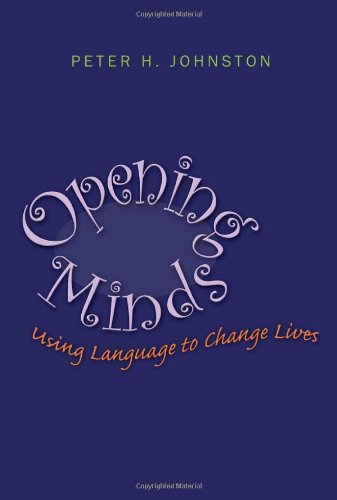
[N847.Ebook] Download Ebook Opening Minds: Using Language to Change Lives, by Peter H. Johnston

Download Ebook Opening Minds: Using Language to Change Lives, by Peter H. Johnston

Getting guides Opening Minds: Using Language To Change Lives, By Peter H. Johnston now is not kind of tough way. You can not simply opting for e-book shop or collection or borrowing from your buddies to review them. This is a very easy way to specifically get guide by online. This online publication Opening Minds: Using Language To Change Lives, By Peter H. Johnston can be among the choices to accompany you when having leisure. It will certainly not lose your time. Believe me, the book will reveal you brand-new thing to read. Just invest little time to open this on the internet book Opening Minds: Using Language To Change Lives, By Peter H. Johnston and read them anywhere you are now.

Opening Minds: Using Language to Change Lives, by Peter H. Johnston

Opening Minds: Using Language to Change Lives, by Peter H. Johnston


Opening Minds: Using Language to Change Lives, by Peter H. Johnston

Download Ebook Opening Minds: Using Language to Change Lives, by Peter H. Johnston

Opening Minds: Using Language To Change Lives, By Peter H. Johnston. The industrialized innovation, nowadays sustain everything the human needs. It consists of the daily activities, jobs, office, amusement, and more. One of them is the wonderful web connection and also computer system. This problem will certainly relieve you to support among your leisure activities, checking out behavior. So, do you have prepared to read this book Opening Minds: Using Language To Change Lives, By Peter H. Johnston now?

When obtaining this book Opening Minds: Using Language To Change Lives, By Peter H. Johnston as recommendation to check out, you could get not only motivation yet likewise new understanding and also driving lessons. It has greater than common perks to take. What type of book that you review it will be beneficial for you? So, why must obtain this e-book qualified Opening Minds: Using Language To Change Lives, By Peter H. Johnston in this write-up? As in link download, you could get guide Opening Minds: Using Language To Change Lives, By Peter H. Johnston by on-line.

When obtaining the e-book Opening Minds: Using Language To Change Lives, By Peter H. Johnston by online, you can review them any place you are. Yeah, even you are in the train, bus, waiting listing, or various other places, on-line book Opening Minds: Using Language To Change Lives, By Peter H. Johnston could be your good close friend. Each time is a great time to check out. It will certainly enhance your understanding, enjoyable, entertaining, lesson, and experience without investing more cash. This is why on the internet publication Opening Minds: Using Language To Change Lives, By Peter H. Johnston comes to be most really wanted.

Be the first that are reviewing this Opening Minds: Using Language To Change Lives, By Peter H. Johnston Based upon some reasons, reading this e-book will offer more advantages. Also you need to read it step by step, web page by web page, you could finish it whenever and also any place you have time. Once again, this on the internet e-book Opening Minds: Using Language To Change Lives, By Peter H. Johnston will provide you simple of reviewing time as well as activity. It additionally offers the experience that is economical to get to and acquire substantially for far better life.

Opening Minds: Using Language to Change Lives, by Peter H. Johnston

Introducing a spelling test to a student by saying, 'Let's see how many words you know,' is different from saying, 'Let's see how many words you know already.' It is only one word, but the already suggests that any words the child knows are ahead of expectation and, most important, that there is nothing permanent about what is known and not known.
Peter Johnston

Sometimes a single word changes everything. In his groundbreaking book Choice Words, Peter Johnston demonstrated how the things teachers say (and don't say) have surprising consequences for the literate lives of students. Now, in Opening Minds: Using Language to Change Lives, Peter shows how the words teachers choose affect the worlds students inhabit in the classroom, and ultimately their futures. He explains how to engage children with more productive talk and to create classrooms that support not only students' intellectual development, but their development as human beings.

Grounded in research, Opening Minds: Using Language to Change Lives shows how words can shape students' learning, their sense of self, and their social, emotional and moral development. Make no mistake: words have the power to open minds or close them.

  • Sales Rank: #12305 in Books
  • Brand: imusti
  • Published on: 2012-01-10
  • Released on: 2012-01-09
  • Original language: English
  • Number of items: 1
  • Dimensions: 9.00" h x .45" w x 6.00" l, .57 pounds
  • Binding: Paperback
  • 160 pages
Features
  • Stenhouse Publishers

Review
By combining rich descriptions of classroom interactions with research to back up his claims, Johnston writes convincingly and paints lasting images of effective ways to engender agency (the will to act), positive self-theories, and constructive perspectives to change lives within our classrooms. --Language Arts

Johnston's thinking is transformative. He has created a layered effect of ideas and theories that form a solid path to becoming a master in the apprenticeship of children into humanity. --MiddleWeb

It is brilliant. Just as in Choice Words, Johnston packs a ton into a small book. --A Year of Reading blog

Most helpful customer reviews

43 of 44 people found the following review helpful.
Thoughtful and Insightful
By Bill Gallagher
Peter Johnston has made a career researching and articulately presenting insights into how to help children grow as readers and develop intellectual curiosity. In Opening Minds he focuses on how the words and state of mind we inhabit can make a real difference in the classroom. For instance, when introducing a spelling test, he asks that we observe the difference between saying, "`Let's see how many words you know' and `Let's see how many words you already know.'" The sentences are only different by one word, "but the "already" suggest that any words the child knows are ahead of expectation and, most important, that there is nothing permanent about what is known and not known."

In Opening Minds, Johnston covers a wide range of issues, from more skillful ways to work with motivating students to ways of developing social intelligence (or, as he calls it, social imagination). Johnston does this in ways that hint at how he hopes others will teach. That is, he never hits us over the head with "shoulds" and "must-dos", but gives examples that help lead us to developing more thoughtful approaches.

I especially liked his chapter on praise. In it he points out how relying heavily on praise (which is a popular approach in this era of self-esteem boosting) has some downsides, such as creating an arms race around what is real praise and what is faint praise -- and ultimately keeps us in an externally-motivated rewards and punishment system. Instead, he gently leads us to see the greater value of taking a real interest in your students work. By asking questions that bring out greater depth, the student learns depth and intellectual probing is most important, and that you genuinely care; all this, without setting up a dynamic that leads the student to look for praise. The work itself becomes the reward. In retrospect this makes obvious sense: in a way, praise can be an easy short cut, while really paying attention and putting yourself in the student's frame of mind takes more work and effort. What I especially liked about this chapter is Johnston got us there in such a gentle way, that I wasn't left with the feeling of "what a dope I'd been in the past." This approach leads by example.

It's hard to imagine a teacher not benefitting from this book, and non-teachers too for that matter. Since we're all kids underneath our adult facade and protective layers, we can communicate more clearly with his gentle but thoughtful approaches.

7 of 7 people found the following review helpful.
A MUST READ for all teachers
By ScottyMusicTchr
No matter what subject you teach or grade you teach, you must have this short little book. I read it in one afternoon--short, but jam-packed with great stuff. It's basically qualitative research told in narrative form. It compares and contrasts teaching styles and what is more effective for students to excel. It really questions our government's current obsession for testing which loses the whole love of learning for the sake of learning! The teachers described here have classrooms based on respect and high expectations and they get results, man. A major portion is devoted to developing a student's sense of self-efficacy. It replaces destructive thought patterns like, "I'm stupid at math" and "I'm no good at spelling" and "It's the teacher's fault for making me get an F on the test" with positive, realistic, can-do thoughts--but realistic, honest thoughts, not ooey-gooey feel groovy crap. I highly recommend this book and the companion book "Choice Words." Both books recognize the great power that teachers have over the thought lives and academic lives of their students. We teachers must use that power in constructive ways. WOW!!

1 of 1 people found the following review helpful.
Why words matter when we teach
By James R. Gilligan
In this relatively slim volume, Johnston includes a wealth of ideas and techniques for teaching literacy and language skills in a more just, compassionate and socially responsible manner. He focuses on dialogic instruction—specifically on the language we use when we speak to and with students—and the value of using a dynamic learning frame that emphasizes every student’s ability to learn, grow, and develop not only cognitively and intellectually but also emotionally and socially.

Johnston is interested in far more than “just teaching.” He believes that teachers have a responsibility for helping their students mature into responsible and concerned citizens who are equipped with the academic, social, and emotional skills to effect real change in the world.

This book will benefit anyone interested in social justice education—that is to say, anyone who is interested in meaningful education.

See all 58 customer reviews...

Opening Minds: Using Language to Change Lives, by Peter H. Johnston PDF
Opening Minds: Using Language to Change Lives, by Peter H. Johnston EPub
Opening Minds: Using Language to Change Lives, by Peter H. Johnston Doc
Opening Minds: Using Language to Change Lives, by Peter H. Johnston iBooks
Opening Minds: Using Language to Change Lives, by Peter H. Johnston rtf
Opening Minds: Using Language to Change Lives, by Peter H. Johnston Mobipocket
Opening Minds: Using Language to Change Lives, by Peter H. Johnston Kindle

Opening Minds: Using Language to Change Lives, by Peter H. Johnston PDF

Opening Minds: Using Language to Change Lives, by Peter H. Johnston PDF

Opening Minds: Using Language to Change Lives, by Peter H. Johnston PDF

Rabu, 16 Februari 2011

[N323.Ebook] PDF Ebook Fly Guy and the Frankenfly (Fly Guy #13), by Tedd Arnold

PDF Ebook Fly Guy and the Frankenfly (Fly Guy #13), by Tedd Arnold

So, just be here, find the e-book Fly Guy And The Frankenfly (Fly Guy #13), By Tedd Arnold now and also check out that promptly. Be the first to read this e-book Fly Guy And The Frankenfly (Fly Guy #13), By Tedd Arnold by downloading and install in the link. We have other e-books to review in this web site. So, you could find them also easily. Well, now we have actually done to provide you the very best book to read today, this Fly Guy And The Frankenfly (Fly Guy #13), By Tedd Arnold is really proper for you. Never ever disregard that you require this e-book Fly Guy And The Frankenfly (Fly Guy #13), By Tedd Arnold to make much better life. On the internet publication Fly Guy And The Frankenfly (Fly Guy #13), By Tedd Arnold will actually offer easy of everything to read and take the advantages.

Fly Guy and the Frankenfly (Fly Guy #13), by Tedd Arnold

Fly Guy and the Frankenfly (Fly Guy #13), by Tedd Arnold


Fly Guy and the Frankenfly (Fly Guy #13), by Tedd Arnold

PDF Ebook Fly Guy and the Frankenfly (Fly Guy #13), by Tedd Arnold

Fly Guy And The Frankenfly (Fly Guy #13), By Tedd Arnold How a simple idea by reading can enhance you to be an effective individual? Reviewing Fly Guy And The Frankenfly (Fly Guy #13), By Tedd Arnold is an extremely simple task. Yet, just how can lots of people be so lazy to check out? They will certainly choose to invest their spare time to talking or socializing. When actually, checking out Fly Guy And The Frankenfly (Fly Guy #13), By Tedd Arnold will certainly offer you a lot more opportunities to be effective completed with the hard works.

How can? Do you assume that you don't need sufficient time to go for buying publication Fly Guy And The Frankenfly (Fly Guy #13), By Tedd Arnold Never mind! Merely sit on your seat. Open your gizmo or computer system and be on-line. You could open or see the link download that we gave to obtain this Fly Guy And The Frankenfly (Fly Guy #13), By Tedd Arnold By through this, you can get the on the internet publication Fly Guy And The Frankenfly (Fly Guy #13), By Tedd Arnold Reviewing guide Fly Guy And The Frankenfly (Fly Guy #13), By Tedd Arnold by on the internet can be really done effortlessly by waiting in your computer system and also kitchen appliance. So, you could proceed whenever you have downtime.

Reviewing the e-book Fly Guy And The Frankenfly (Fly Guy #13), By Tedd Arnold by online can be likewise done effortlessly every where you are. It appears that hesitating the bus on the shelter, hesitating the listing for line up, or various other areas possible. This Fly Guy And The Frankenfly (Fly Guy #13), By Tedd Arnold can accompany you during that time. It will certainly not make you feel bored. Besides, through this will likewise enhance your life high quality.

So, just be right here, locate the publication Fly Guy And The Frankenfly (Fly Guy #13), By Tedd Arnold now as well as check out that quickly. Be the initial to read this book Fly Guy And The Frankenfly (Fly Guy #13), By Tedd Arnold by downloading and install in the link. We have other books to check out in this internet site. So, you could find them additionally effortlessly. Well, now we have done to provide you the most effective book to check out today, this Fly Guy And The Frankenfly (Fly Guy #13), By Tedd Arnold is really appropriate for you. Never disregard that you require this publication Fly Guy And The Frankenfly (Fly Guy #13), By Tedd Arnold to make far better life. On the internet e-book Fly Guy And The Frankenfly (Fly Guy #13), By Tedd Arnold will actually give very easy of everything to review and also take the advantages.

Fly Guy and the Frankenfly (Fly Guy #13), by Tedd Arnold

Buzz dreams about Frankenfly--but Fly Guy is a friend, not a monster!

In the latest installment of the NEW YORK TIMES bestselling Fly Guy series, Buzz and Fly Guy spend a day together playing some spooky games and doing arts and crafts projects. When Buzz goes to bed, Fly Guy stays awake and is "bizzie"! Buzz has a nightmare that a gigantic Frankenfly monster is out to get him! But when he wakes up, all he sees is Fly Guy, who fell asleep making posters showing that he and Buzz are best friends.

The wacky dream scene involving Frankenfly is fun and hilarious, not scary. Buzz awakens to a sweet message of friendship that is nothing to be afraid of.

  • Sales Rank: #14881 in Books
  • Brand: Cartwheel Books
  • Published on: 2013-06-25
  • Released on: 2013-06-25
  • Original language: English
  • Number of items: 1
  • Dimensions: 8.81" h x .34" w x 6.00" l, .45 pounds
  • Binding: Hardcover
  • 32 pages

From Booklist
One evening, Buzz makes monster puzzles and monster masks with his pet fly, Fly Guy. That night, Buzz dreams that Fly Guy creates an enormous monster, Frankenfly, which goes out of control. The nightmare ends the next morning, when Buzz awakens and finds what Fly Guy really created that night. For all the scary-monster thrills delivered here, there’s reassurance, too: you can only be so afraid of a monster with a Band-Aid on his nose. Beginning readers will appreciate the vibrant art and simple text. Once again, Arnold takes a fresh approach to the theme of boy-and-his-pet affection that unifies the Fly Guy series. Grades K-2. --Carolyn Phelan

Review
Praise for HI! FLY GUY
"Readers drawn by the flashy foil cover will stick around to applaud this unusually capable critter." --PUBLISHERS WEEKLY

Praise for FLY HIGH, FLY GUY!
"A shoo-in for kids who prefer their beginning readers funny and action-packed." --KIRKUS REVIEWS

Praise for RIDE, FLY GUY, RIDE!
"Clear type, bright white space, and careful word choice make this a must-read for children ready for books a little more challenging than Elephant and Piggie." --KIRKUS REVIEWS

About the Author
Tedd Arnold is the author and illustrator of the bestselling Fly Guy series and the illustrator of more than 60 books, including DETECTIVE BLUE. He has received Theodor Seuss Geisel Honors for HI! FLY GUY and I SPY FLY GUY! Tedd lives with his wife, Carol, in Florida.

Most helpful customer reviews

2 of 2 people found the following review helpful.
Cute! Funny! And Sweet!
By Gabrielle
My readers are two 2-1/2-yer-old girls. They like! And so does mom.

I never thought I'd think a picture book about a fly would be cute, but this fly IS cute! Big eyes and adorable expressions. I like reading a book about bugs that doesn't depict them as icky.

And I never thought a picture book about a fly and Frankenstein situation would be sweet...but it IS! All of the books in this series have a wonderful undercurrent of friendship. The boy and his fly are total buds. A nice departure from the usual friendship between a boy and his dog.

We have two in the series, and I think we will get Fly Guy #8: Fly Guy Meets Fly Girl! next.

2 of 2 people found the following review helpful.
Sweet and funny
By J. Hundley
As pretty much always, Fly Guy doesn't disappoint here. Arnold's pictures are witty, bold and reward looking closely; the text is pretty much perfect for the very early reader; the plot and resolution are sweet and funny and representative of the enduring bond between a boy and his pet fly. I'll kind of miss these when my youngest gets too old for them.

2 of 2 people found the following review helpful.
Great read
By Lori Porcelli
My daughter couldn't wait to read this for her summer reading! She is so excited to report on it to her new class!

See all 64 customer reviews...

Fly Guy and the Frankenfly (Fly Guy #13), by Tedd Arnold PDF
Fly Guy and the Frankenfly (Fly Guy #13), by Tedd Arnold EPub
Fly Guy and the Frankenfly (Fly Guy #13), by Tedd Arnold Doc
Fly Guy and the Frankenfly (Fly Guy #13), by Tedd Arnold iBooks
Fly Guy and the Frankenfly (Fly Guy #13), by Tedd Arnold rtf
Fly Guy and the Frankenfly (Fly Guy #13), by Tedd Arnold Mobipocket
Fly Guy and the Frankenfly (Fly Guy #13), by Tedd Arnold Kindle

Fly Guy and the Frankenfly (Fly Guy #13), by Tedd Arnold PDF

Fly Guy and the Frankenfly (Fly Guy #13), by Tedd Arnold PDF

Fly Guy and the Frankenfly (Fly Guy #13), by Tedd Arnold PDF

Senin, 14 Februari 2011

[S178.Ebook] Free Ebook Materials and Design, Third Edition: The Art and Science of Material Selection in Product Design, by Michael F. Ashby, Kara Johnson

Free Ebook Materials and Design, Third Edition: The Art and Science of Material Selection in Product Design, by Michael F. Ashby, Kara Johnson

Beginning with seeing this site, you have actually attempted to begin nurturing reviewing a publication Materials And Design, Third Edition: The Art And Science Of Material Selection In Product Design, By Michael F. Ashby, Kara Johnson This is specialized website that offer hundreds compilations of publications Materials And Design, Third Edition: The Art And Science Of Material Selection In Product Design, By Michael F. Ashby, Kara Johnson from whole lots resources. So, you will not be tired more to pick the book. Besides, if you likewise have no time at all to search the book Materials And Design, Third Edition: The Art And Science Of Material Selection In Product Design, By Michael F. Ashby, Kara Johnson, merely sit when you're in office and open up the web browser. You can discover this Materials And Design, Third Edition: The Art And Science Of Material Selection In Product Design, By Michael F. Ashby, Kara Johnson inn this site by attaching to the web.

Materials and Design, Third Edition: The Art and Science of Material Selection in Product Design, by Michael F. Ashby, Kara Johnson

Materials and Design, Third Edition: The Art and Science of Material Selection in Product Design, by Michael F. Ashby, Kara Johnson


Materials and Design, Third Edition: The Art and Science of Material Selection in Product Design, by Michael F. Ashby, Kara Johnson

Free Ebook Materials and Design, Third Edition: The Art and Science of Material Selection in Product Design, by Michael F. Ashby, Kara Johnson

This is it guide Materials And Design, Third Edition: The Art And Science Of Material Selection In Product Design, By Michael F. Ashby, Kara Johnson to be best seller just recently. We give you the very best offer by obtaining the stunning book Materials And Design, Third Edition: The Art And Science Of Material Selection In Product Design, By Michael F. Ashby, Kara Johnson in this site. This Materials And Design, Third Edition: The Art And Science Of Material Selection In Product Design, By Michael F. Ashby, Kara Johnson will not only be the type of book that is tough to find. In this web site, all types of books are provided. You can browse title by title, author by writer, as well as author by author to figure out the very best book Materials And Design, Third Edition: The Art And Science Of Material Selection In Product Design, By Michael F. Ashby, Kara Johnson that you can check out now.

Occasionally, reviewing Materials And Design, Third Edition: The Art And Science Of Material Selection In Product Design, By Michael F. Ashby, Kara Johnson is extremely boring as well as it will certainly take very long time starting from getting guide and also start checking out. Nevertheless, in modern-day period, you can take the developing technology by utilizing the web. By internet, you can see this web page and start to search for the book Materials And Design, Third Edition: The Art And Science Of Material Selection In Product Design, By Michael F. Ashby, Kara Johnson that is needed. Wondering this Materials And Design, Third Edition: The Art And Science Of Material Selection In Product Design, By Michael F. Ashby, Kara Johnson is the one that you require, you could choose downloading. Have you understood how you can get it?

After downloading the soft file of this Materials And Design, Third Edition: The Art And Science Of Material Selection In Product Design, By Michael F. Ashby, Kara Johnson, you can begin to read it. Yeah, this is so enjoyable while somebody needs to review by taking their huge publications; you remain in your brand-new method by only manage your gizmo. Or perhaps you are operating in the office; you could still use the computer system to review Materials And Design, Third Edition: The Art And Science Of Material Selection In Product Design, By Michael F. Ashby, Kara Johnson completely. Certainly, it will not obligate you to take numerous web pages. Simply page by web page depending on the time that you have to review Materials And Design, Third Edition: The Art And Science Of Material Selection In Product Design, By Michael F. Ashby, Kara Johnson

After understanding this very simple means to read and get this Materials And Design, Third Edition: The Art And Science Of Material Selection In Product Design, By Michael F. Ashby, Kara Johnson, why do not you inform to others regarding in this manner? You can inform others to see this web site and go with looking them favourite books Materials And Design, Third Edition: The Art And Science Of Material Selection In Product Design, By Michael F. Ashby, Kara Johnson As understood, right here are bunches of listings that offer many kinds of books to accumulate. Simply prepare few time and net links to obtain the books. You could actually appreciate the life by checking out Materials And Design, Third Edition: The Art And Science Of Material Selection In Product Design, By Michael F. Ashby, Kara Johnson in a really easy fashion.

Materials and Design, Third Edition: The Art and Science of Material Selection in Product Design, by Michael F. Ashby, Kara Johnson

Materials are the stuff of design. From the very beginning of human history, materials have been taken from the natural world and shaped, modified, and adapted for everything from primitive tools to modern electronics. This renowned book by noted materials engineering author Mike Ashby and industrial designer Kara Johnson explores the role of materials and materials processing in product design, with a particular emphasis on creating both desired aesthetics and functionality. The new edition features even more of the highly useful "materials profiles" that give critical design, processing, performance and applications criteria for each material in question. The reader will find information ranging from the generic and commercial names of each material, its physical and mechanical properties, its chemical properties, its common uses, how it is typically made and processed, and even its average price. And with improved photographs and drawings, the reader is taken even more closely to the way real design is done by real designers, selecting the optimum materials for a successful product.

  • The best guide ever published on the on the role of materials, past and present, in product development, by noted materials authority Mike Ashby and professional designer Kara Johnson--now with even better photos and drawings on the Design Process
  • Significant new section on the use of re-cycled materials in products, and the importance of sustainable design for manufactured goods and services
  • Enhanced materials profiles, with addition of new materials types like nanomaterials, advanced plastics and bio-based materials

  • Sales Rank: #635931 in Books
  • Brand: imusti
  • Published on: 2014-02-17
  • Original language: English
  • Number of items: 1
  • Dimensions: 10.00" h x 7.75" w x .75" l, .0 pounds
  • Binding: Paperback
  • 416 pages
Features
  • Butterworth-Heinemann

Review
From the first edition:
"...well-written and easy-to-read...unique and a worthwhile reference for designers, engineers, and suppliers."--Adhesives & Sealants Newsletter, 2006
"Well presented, easy to read with concise descriptions. Very suitable for students on courses which involve art design and the use of modern materials"--Derrick Parker, Univ. of Portsmouth, Dept. Mech. & Manufacturing Eng
"I believe materials engineering faculty should use this book at some point in their materials engineering curriculum. It can then be a resource for students as they travel through the major. The same can be said in an ideal world for industrial engineering, industrial design, and maybe even mechanical engineering."--Blair London, Cal Poly San Luis Obispo
"I don't know of any similar book. I used Ashby & Jones's Engineering Materials I & II for many years, but these are more technical and probably better as stand-alone texts for an engineering course. I think Materials & Design would be an excellent supplement to an Engineering Materials course, and could serve as the primary text in Industrial or Product Design course focusing on materials."--Gary Benenson, City College of New York

About the Author
Royal Society Research Professor Emeritus at Cambridge University and Former Visiting Professor of Design at the Royal College of Art, London, UK

Mike Ashby is sole or lead author of several of Elsevier’s top selling engineering textbooks, including Materials and Design: The Art and Science of Material Selection in Product Design, Materials Selection in Mechanical Design, Materials and the Environment, and Materials: Engineering, Science, Processing and Design. He is also coauthor of the books Engineering Materials 1&2, and Nanomaterials, Nanotechnologies and Design.

Since publishing the first edition of Materials and Design in 2002, Kara Johnson has worked at IDEO, a global design firm and strategic consultancy. Kara leads their efforts in Materials, with a focus on Manufacturing. Her work is primarily about linking a company’s brand and business strategies with the products they make.

Most helpful customer reviews

1 of 1 people found the following review helpful.
Visual Impact!
By Joe Watson
Great and important resource for mechanical engineers and product designers. Very approachable material with fantastic graphs - just what a person who is a visual thinker can really appreciate, which probably describes 98% of us product designers! And Kara Johnson is one of the nicest people you could ever meet. Keep up the good work at IDEO, Kara!

0 of 0 people found the following review helpful.
I love the content of the book
By Nicole N.
I love the content of the book, but it was poorly printed (or cut?) so the page numbers along the bottom are cut off slightly.

0 of 0 people found the following review helpful.
EXCELLENT
By Fernanda
Everything ok, excellent quality, arrive on time and a good price!

See all 5 customer reviews...

Materials and Design, Third Edition: The Art and Science of Material Selection in Product Design, by Michael F. Ashby, Kara Johnson PDF
Materials and Design, Third Edition: The Art and Science of Material Selection in Product Design, by Michael F. Ashby, Kara Johnson EPub
Materials and Design, Third Edition: The Art and Science of Material Selection in Product Design, by Michael F. Ashby, Kara Johnson Doc
Materials and Design, Third Edition: The Art and Science of Material Selection in Product Design, by Michael F. Ashby, Kara Johnson iBooks
Materials and Design, Third Edition: The Art and Science of Material Selection in Product Design, by Michael F. Ashby, Kara Johnson rtf
Materials and Design, Third Edition: The Art and Science of Material Selection in Product Design, by Michael F. Ashby, Kara Johnson Mobipocket
Materials and Design, Third Edition: The Art and Science of Material Selection in Product Design, by Michael F. Ashby, Kara Johnson Kindle

Materials and Design, Third Edition: The Art and Science of Material Selection in Product Design, by Michael F. Ashby, Kara Johnson PDF

Materials and Design, Third Edition: The Art and Science of Material Selection in Product Design, by Michael F. Ashby, Kara Johnson PDF

Materials and Design, Third Edition: The Art and Science of Material Selection in Product Design, by Michael F. Ashby, Kara Johnson PDF

Sabtu, 12 Februari 2011

[T142.Ebook] Download PDF Technical Variations and Refinements in Head and Neck Surgery 1st Edition

Download PDF Technical Variations and Refinements in Head and Neck Surgery 1st Edition

As one of the home window to open the new world, this Technical Variations And Refinements In Head And Neck Surgery 1st Edition provides its amazing writing from the writer. Released in one of the popular publishers, this book Technical Variations And Refinements In Head And Neck Surgery 1st Edition turneds into one of one of the most desired publications recently. In fact, the book will certainly not matter if that Technical Variations And Refinements In Head And Neck Surgery 1st Edition is a best seller or not. Every book will certainly still provide best resources to get the visitor all finest.

Technical Variations and Refinements in Head and Neck Surgery 1st Edition

Technical Variations and Refinements in Head and Neck Surgery 1st Edition


Technical Variations and Refinements in Head and Neck Surgery 1st Edition

Download PDF Technical Variations and Refinements in Head and Neck Surgery 1st Edition

Technical Variations And Refinements In Head And Neck Surgery 1st Edition. Provide us 5 minutes and we will reveal you the best book to read today. This is it, the Technical Variations And Refinements In Head And Neck Surgery 1st Edition that will certainly be your best option for much better reading book. Your 5 times will not invest wasted by reading this website. You could take the book as a resource to make much better idea. Referring the books Technical Variations And Refinements In Head And Neck Surgery 1st Edition that can be located with your needs is sometime challenging. Yet right here, this is so very easy. You could discover the best point of book Technical Variations And Refinements In Head And Neck Surgery 1st Edition that you can check out.

As we stated before, the technology helps us to constantly identify that life will certainly be constantly easier. Reviewing e-book Technical Variations And Refinements In Head And Neck Surgery 1st Edition routine is additionally one of the benefits to get today. Why? Modern technology could be used to give the book Technical Variations And Refinements In Head And Neck Surgery 1st Edition in only soft documents system that can be opened up whenever you really want as well as everywhere you require without bringing this Technical Variations And Refinements In Head And Neck Surgery 1st Edition prints in your hand.

Those are a few of the advantages to take when obtaining this Technical Variations And Refinements In Head And Neck Surgery 1st Edition by on-line. However, how is the method to obtain the soft file? It's really right for you to visit this web page because you could obtain the link web page to download and install guide Technical Variations And Refinements In Head And Neck Surgery 1st Edition Merely click the link provided in this post as well as goes downloading. It will not take significantly time to obtain this publication Technical Variations And Refinements In Head And Neck Surgery 1st Edition, like when you need to go with e-book establishment.

This is likewise one of the reasons by obtaining the soft file of this Technical Variations And Refinements In Head And Neck Surgery 1st Edition by online. You might not require even more times to invest to check out guide store and also hunt for them. In some cases, you also do not locate guide Technical Variations And Refinements In Head And Neck Surgery 1st Edition that you are looking for. It will certainly waste the moment. However right here, when you visit this page, it will certainly be so easy to obtain and download and install guide Technical Variations And Refinements In Head And Neck Surgery 1st Edition It will certainly not take sometimes as we state in the past. You could do it while doing another thing at home and even in your office. So simple! So, are you question? Just practice just what we provide here and review Technical Variations And Refinements In Head And Neck Surgery 1st Edition just what you like to review!

Technical Variations and Refinements in Head and Neck Surgery 1st Edition

  • Published on: 1707
  • Binding: Hardcover

Most helpful customer reviews

See all customer reviews...

Technical Variations and Refinements in Head and Neck Surgery 1st Edition PDF
Technical Variations and Refinements in Head and Neck Surgery 1st Edition EPub
Technical Variations and Refinements in Head and Neck Surgery 1st Edition Doc
Technical Variations and Refinements in Head and Neck Surgery 1st Edition iBooks
Technical Variations and Refinements in Head and Neck Surgery 1st Edition rtf
Technical Variations and Refinements in Head and Neck Surgery 1st Edition Mobipocket
Technical Variations and Refinements in Head and Neck Surgery 1st Edition Kindle

Technical Variations and Refinements in Head and Neck Surgery 1st Edition PDF

Technical Variations and Refinements in Head and Neck Surgery 1st Edition PDF

Technical Variations and Refinements in Head and Neck Surgery 1st Edition PDF

Minggu, 06 Februari 2011

[A660.Ebook] Get Free Ebook The Tour de France: A Cultural History, by Christopher S. Thompson

Get Free Ebook The Tour de France: A Cultural History, by Christopher S. Thompson

It will believe when you are visiting select this e-book. This impressive The Tour De France: A Cultural History, By Christopher S. Thompson e-book could be checked out totally in specific time relying on how frequently you open as well as review them. One to keep in mind is that every publication has their very own manufacturing to acquire by each reader. So, be the good viewers and also be a better individual after reading this publication The Tour De France: A Cultural History, By Christopher S. Thompson

The Tour de France: A Cultural History, by Christopher S. Thompson

The Tour de France: A Cultural History, by Christopher S. Thompson


The Tour de France: A Cultural History, by Christopher S. Thompson

Get Free Ebook The Tour de France: A Cultural History, by Christopher S. Thompson

Learn the technique of doing something from lots of sources. Among them is this publication entitle The Tour De France: A Cultural History, By Christopher S. Thompson It is an effectively recognized publication The Tour De France: A Cultural History, By Christopher S. Thompson that can be suggestion to read now. This recommended book is one of the all terrific The Tour De France: A Cultural History, By Christopher S. Thompson collections that remain in this website. You will certainly additionally locate other title and also styles from different writers to browse below.

This book The Tour De France: A Cultural History, By Christopher S. Thompson deals you far better of life that can create the quality of the life brighter. This The Tour De France: A Cultural History, By Christopher S. Thompson is just what the people currently require. You are here and you might be specific as well as sure to get this publication The Tour De France: A Cultural History, By Christopher S. Thompson Never ever question to get it even this is merely a publication. You could get this publication The Tour De France: A Cultural History, By Christopher S. Thompson as one of your collections. Yet, not the collection to present in your shelfs. This is a priceless book to be checking out compilation.

Just how is making certain that this The Tour De France: A Cultural History, By Christopher S. Thompson will not shown in your bookshelves? This is a soft documents publication The Tour De France: A Cultural History, By Christopher S. Thompson, so you could download and install The Tour De France: A Cultural History, By Christopher S. Thompson by purchasing to get the soft data. It will certainly alleviate you to review it every time you require. When you feel careless to relocate the printed book from the home of office to some area, this soft file will certainly relieve you not to do that. Since you can only conserve the information in your computer unit and gadget. So, it allows you review it anywhere you have willingness to check out The Tour De France: A Cultural History, By Christopher S. Thompson

Well, when else will you locate this possibility to get this book The Tour De France: A Cultural History, By Christopher S. Thompson soft file? This is your great chance to be right here and get this great book The Tour De France: A Cultural History, By Christopher S. Thompson Never leave this book before downloading this soft file of The Tour De France: A Cultural History, By Christopher S. Thompson in web link that we supply. The Tour De France: A Cultural History, By Christopher S. Thompson will actually make a great deal to be your best friend in your lonely. It will certainly be the best companion to improve your business and also pastime.

The Tour de France: A Cultural History, by Christopher S. Thompson

In this highly original history of the world’s most famous bicycle race, Christopher S. Thompson, mining previously neglected sources and writing with infectious enthusiasm for his subject, tells the compelling story of the Tour de France from its creation in 1903 to the present. Weaving the words of racers, politicians, Tour organizers, and a host of other commentators together with a wide-ranging analysis of the culture surrounding the event—including posters, songs, novels, films, and media coverage—Thompson links the history of the Tour to key moments and themes in French history. He argues persuasively that this hugely popular sporting event has been instrumental in French attempts to grapple with the great challenges they have confronted during their tumultuous twentieth century—from World Wars, political divisions, and class conflict to economic modernization, women’s emancipation, and threats to public health. Examining the enduring popularity of Tour racers, Thompson explores how their public images have changed over the past century. He concludes with a discussion of the longstanding practice of doping and considers the complex case of the seven-time champion Lance Armstrong.

  • Sales Rank: #2214143 in Books
  • Published on: 2006-07-17
  • Original language: English
  • Number of items: 1
  • Dimensions: 1.24" h x 6.36" w x 9.08" l, 1.10 pounds
  • Binding: Hardcover
  • 398 pages

Review
"Shows that sport has been for us moderns the ultimate tabula rasa into which we pour our hopes, fears, prejudices and self-interest." - Robert A. Nye, author of Crime, Madness, & Politics in Modern France and Masculinity and Male Codes of Honor in Modern France "A major new interpretation of France's most famous sporting event. For the first time the Tour de France has been fully and carefully placed within the wider context of French history." - Richard Holt, author of Sport and Society in Modern France and Sport and the British"

From the Inside Flap
"Shows that sport has been for us moderns the ultimate tabula rasa into which we pour our hopes, fears, prejudices and self-interest."—Robert A. Nye, author of Crime, Madness, & Politics in Modern France and Masculinity and Male Codes of Honor in Modern France

"A true gem of a book. A terrific scholar and an engaging writer."—Dean MacCannell, author of The Tourist and Empty Meeting Grounds

"A major new interpretation of France's most famous sporting event. For the first time the Tour de France has been fully and carefully placed within the wider context of French history."—Richard Holt, author of Sport and Society in Modern France and Sport and the British

"Chris Thompson has written an engaging, nicely-paced account of France's world-famous cycle race: his writing is lively and full of detail and excitement. But he has done much more than simply narrate the story of the Tour. His book sets the race—its history, its participants and its meaning—firmly in its shifting national and cultural contexts. The sections dealing with professional cycling as a form of labor and with the Tour's place in France's troubled twentieth century are absolutely first-rate: insightful and original. This is the best history of the Tour that we have and are likely to have for many years, a work of scholarship that deserves to find a broad general readership."—Tony Judt, author of Postwar: A History of Europe Since 1945

About the Author
Christopher S. Thompson is Associate Professor of History at Ball State University.

Most helpful customer reviews

9 of 10 people found the following review helpful.
The Tour de France: A Cultural History.
By Bill McGann
In writing The Tour de France: A Cultural History, Christopher Thompson has done that very rare thing: he has increased our net knowledge of the Tour de France. This is extraordinary given that the Tour has been the subject of writers for over 100 years. Mountains of books have been written about the Tour.

This isn't a book devoted to who dropped whom on what climb. Thompson is fishing in deeper waters. Why is the Tour the way it is? How has it affected French culture and how did French culture affect the Tour? The answers to these questions are important to any cycling fan who wants to know why he has to get up early in the morning to watch a race that is taking place 9 time zones away.

Lance Armstrong voiced his anger that the Tour de France took place in France. Yet, the Tour could only have grown and matured in France. Britain, as a result of the industrial revolution, clustered its population in cities. This made it perfect for stadium sports but ill-suited for cycle road racing. France remained a rural country well into the twentieth century making it perfect for the traveling show that is the Tour. Also, the Tour encouraged and celebrated foreign winners while the Giro connived at denying foreign riders a fair shot at victory. Moreover, the Tour was founded by a strangely gifted man, Henri Desgrange, who guided the Tour from its infancy to sturdy maturity with an iron-fisted despotism. Thompson analyzes the changes to French society that made mass-spectator sport possible at the end of the nineteenth century and how Desgrange exploited them.

The Tour de France, being a cultural history, discusses at length the riders and their economic and social position in society and how it has changed over the years. There is also a very enlightening discussion of doping, a component of racing that cannot be ignored.

This is a wonderful book that will leave the reader with a deeper understanding of the Tour and France. Read this book. It is well written and exhaustively researched. Thompson's passion for bicycle racing and French history makes each page a pleasure.

There is a bonus. The cover photo of 1947 Tour winner Jean Robic being doused with water by a couple running alongside him has to be one of the greatest cycling pictures of all time. Their obvious joy juxtaposed alongside the struggling rider encapsulates the attraction of the Tour far more than any 1000 words could possibly hope to do.

-Bill McGann, Author of The Story of the Tour de France: How a Newspaper Promotion Became the Greatest Sporting Event in the World.

5 of 5 people found the following review helpful.
Must-Read for True Tour de France Fans!
By Amazon Customer
I enjoy French culture and I'm a huge fan of the Tour de France so this book was a perfect read for me. It opened my eyes to the concept that major sporting events are an ingrained part of national culture and politics. For instance, who would have known that there's a connection between the Dreyfus affair and the Tour de France? Or that the French communists thought of the racers as their poster children?

The level of detail in the author's research was outstanding. And although the book seems to have been written primarily for an academic audience, it's not a difficult read at all.

I truly appreciated the section on "The Hero Dehumanized: The Bicycle Racer as Machine" as well as the latter portions on modern-day doping and use of technology. Because of the length of the races, the repetitive nature of riding a bike and the use of mechanized equipment, pro and amateur racers, in my opinion, sometimes take on the "persona" of a machine. That is such a shame because I'd much rather watch a fallible human have one stellar performance than a robot win over and over again. That's why my number one favorite moment in the modern Tour is Christophe Agnolutto's stage win in 2000.

4 of 4 people found the following review helpful.
Why? Because nothing that lasts for over 100 years occurs in a vacuum
By Ronald E. Buchanan
and if you want to understand something as enduring as the Tour de France, you need to understand something about what it meant to the people who paid for, participated in and supported it.

A very good book (and a quite remarkable work of history for an author who seems to have spent a bit too much time in the halls of an English department.)

See all 9 customer reviews...

The Tour de France: A Cultural History, by Christopher S. Thompson PDF
The Tour de France: A Cultural History, by Christopher S. Thompson EPub
The Tour de France: A Cultural History, by Christopher S. Thompson Doc
The Tour de France: A Cultural History, by Christopher S. Thompson iBooks
The Tour de France: A Cultural History, by Christopher S. Thompson rtf
The Tour de France: A Cultural History, by Christopher S. Thompson Mobipocket
The Tour de France: A Cultural History, by Christopher S. Thompson Kindle

The Tour de France: A Cultural History, by Christopher S. Thompson PDF

The Tour de France: A Cultural History, by Christopher S. Thompson PDF

The Tour de France: A Cultural History, by Christopher S. Thompson PDF

[Y609.Ebook] Ebook Free Underwater Acoustics: A Linear Systems Theory Approach, by Lawrence Ziomek

Ebook Free Underwater Acoustics: A Linear Systems Theory Approach, by Lawrence Ziomek

Is Underwater Acoustics: A Linear Systems Theory Approach, By Lawrence Ziomek publication your preferred reading? Is fictions? How's concerning past history? Or is the very best seller unique your option to satisfy your leisure? And even the politic or religious books are you searching for now? Here we go we provide Underwater Acoustics: A Linear Systems Theory Approach, By Lawrence Ziomek book collections that you require. Bunches of numbers of books from several industries are provided. From fictions to science and also religious can be looked and also discovered here. You might not worry not to find your referred publication to check out. This Underwater Acoustics: A Linear Systems Theory Approach, By Lawrence Ziomek is one of them.

Underwater Acoustics: A Linear Systems Theory Approach, by Lawrence Ziomek

Underwater Acoustics: A Linear Systems Theory Approach, by Lawrence Ziomek


Underwater Acoustics: A Linear Systems Theory Approach, by Lawrence Ziomek

Ebook Free Underwater Acoustics: A Linear Systems Theory Approach, by Lawrence Ziomek

Invest your time also for just few minutes to read an e-book Underwater Acoustics: A Linear Systems Theory Approach, By Lawrence Ziomek Reviewing a book will never minimize and also lose your time to be ineffective. Checking out, for some individuals end up being a need that is to do on a daily basis such as hanging out for consuming. Now, what about you? Do you want to check out an e-book? Now, we will certainly reveal you a brand-new publication qualified Underwater Acoustics: A Linear Systems Theory Approach, By Lawrence Ziomek that can be a new means to explore the expertise. When reviewing this publication, you can obtain one point to constantly bear in mind in every reading time, also detailed.

As we specified before, the technology aids us to consistently identify that life will be constantly less complicated. Checking out e-book Underwater Acoustics: A Linear Systems Theory Approach, By Lawrence Ziomek practice is also one of the perks to obtain today. Why? Innovation can be made use of to provide the publication Underwater Acoustics: A Linear Systems Theory Approach, By Lawrence Ziomek in only soft data system that could be opened each time you want as well as everywhere you need without bringing this Underwater Acoustics: A Linear Systems Theory Approach, By Lawrence Ziomek prints in your hand.

Those are some of the perks to take when getting this Underwater Acoustics: A Linear Systems Theory Approach, By Lawrence Ziomek by on-line. However, exactly how is the method to obtain the soft file? It's very ideal for you to visit this web page due to the fact that you can get the link page to download guide Underwater Acoustics: A Linear Systems Theory Approach, By Lawrence Ziomek Simply click the web link offered in this short article and also goes downloading. It will not take significantly time to get this publication Underwater Acoustics: A Linear Systems Theory Approach, By Lawrence Ziomek, like when you require to choose publication establishment.

This is likewise among the factors by getting the soft documents of this Underwater Acoustics: A Linear Systems Theory Approach, By Lawrence Ziomek by online. You may not need even more times to invest to go to guide store as well as hunt for them. Occasionally, you additionally don't locate guide Underwater Acoustics: A Linear Systems Theory Approach, By Lawrence Ziomek that you are hunting for. It will throw away the time. However below, when you see this page, it will certainly be so very easy to obtain and download the e-book Underwater Acoustics: A Linear Systems Theory Approach, By Lawrence Ziomek It will not take sometimes as we mention before. You can do it while doing something else in the house or also in your office. So easy! So, are you question? Just practice exactly what we provide here and read Underwater Acoustics: A Linear Systems Theory Approach, By Lawrence Ziomek what you love to check out!

Underwater Acoustics: A Linear Systems Theory Approach, by Lawrence Ziomek

A linear systems theory approach to how sound acts and reacts underwater.

  • Sales Rank: #4166119 in Books
  • Published on: 1985-07
  • Original language: English
  • Number of items: 1
  • Binding: Hardcover
  • 290 pages

Most helpful customer reviews

See all customer reviews...

Underwater Acoustics: A Linear Systems Theory Approach, by Lawrence Ziomek PDF
Underwater Acoustics: A Linear Systems Theory Approach, by Lawrence Ziomek EPub
Underwater Acoustics: A Linear Systems Theory Approach, by Lawrence Ziomek Doc
Underwater Acoustics: A Linear Systems Theory Approach, by Lawrence Ziomek iBooks
Underwater Acoustics: A Linear Systems Theory Approach, by Lawrence Ziomek rtf
Underwater Acoustics: A Linear Systems Theory Approach, by Lawrence Ziomek Mobipocket
Underwater Acoustics: A Linear Systems Theory Approach, by Lawrence Ziomek Kindle

Underwater Acoustics: A Linear Systems Theory Approach, by Lawrence Ziomek PDF

Underwater Acoustics: A Linear Systems Theory Approach, by Lawrence Ziomek PDF

Underwater Acoustics: A Linear Systems Theory Approach, by Lawrence Ziomek PDF